Domestic Abuse & Coercive Control: Expert Assessments in Family Proceedings
The Domestic Abuse Act 2021 and Practice Direction 12J fundamentally changed how family courts approach domestic abuse allegations. This guide explains the role of expert witnesses, the DASH risk assessment, coercive control dynamics, and how to instruct the right specialist.

What Is a Domestic Abuse Expert Assessment?
A domestic abuse expert assessment is a structured psychological or forensic evaluation used in family court proceedings to assist the court in understanding the nature, extent, and impact of domestic abuse — including coercive and controlling behaviour. It may assess the psychological impact on the victim, the risk posed by the alleged perpetrator, the dynamics of coercive control, or the impact of the abuse on any children involved. The expert's overriding duty is to the court, not to the instructing party.
The Domestic Abuse Act 2021 introduced a statutory definition of domestic abuse for the first time, encompassing physical, sexual, financial, emotional, and psychological abuse, as well as coercive and controlling behaviour. The Act applies where both parties are personally connected and aged 16 or over. Crucially, it extends protection to children who witness domestic abuse — recognising that exposure to abuse is itself a form of harm.
Expert witnesses in domestic abuse proceedings serve a different function from those in other family law cases. Their primary role is not to determine whether abuse occurred — that is a matter for the court — but to provide the psychological and clinical framework the court needs to evaluate the evidence, understand the dynamics of the relationship, and assess the risk of future harm.
The Legal Framework: DA Act 2021, PD12J, and Re H-N
Practice Direction 12J of the Family Procedure Rules 2010 governs how courts handle domestic abuse allegations in private law proceedings. Where allegations are raised, the court must determine whether a fact-finding hearing is necessary before considering any child arrangements. PD12J requires the court to consider the impact of domestic abuse on the child and on the ability of the non-abusing parent to care for the child, and to ensure that any child arrangements order does not expose either the child or the non-abusing parent to the risk of further harm.
The Court of Appeal's judgment in Re H-N and Others (Children) (Domestic Abuse: Finding of Fact Hearings) [2021] EWCA Civ 448 provided comprehensive guidance on the conduct of fact-finding hearings. The court emphasised that patterns of coercive and controlling behaviour — rather than individual incidents — are often the most significant feature of domestic abuse, and that courts must be equipped to identify and evaluate those patterns. The judgment also addressed the use of Scott Schedules and the importance of proportionality.
Key Questions the Court Typically Asks the Expert
What is the psychological impact of the alleged abuse on the victim, and what is the causal link between the abuse and their current presentation?
Does the victim's presentation — including any apparent inconsistencies or retractions — reflect the known dynamics of domestic abuse and coercive control?
What is the risk of future violence or serious harm posed by the alleged perpetrator, assessed using structured professional judgement tools?
Does the alleged perpetrator demonstrate insight into the impact of their behaviour on the victim and children, and what is their capacity to change?
What is the impact of the domestic abuse on the children's emotional and behavioural development and their attachment relationships?
What arrangements are most likely to promote the children's welfare and safety, having regard to the risk of further harm?
The DASH Risk Assessment: What It Is and What It Is Not
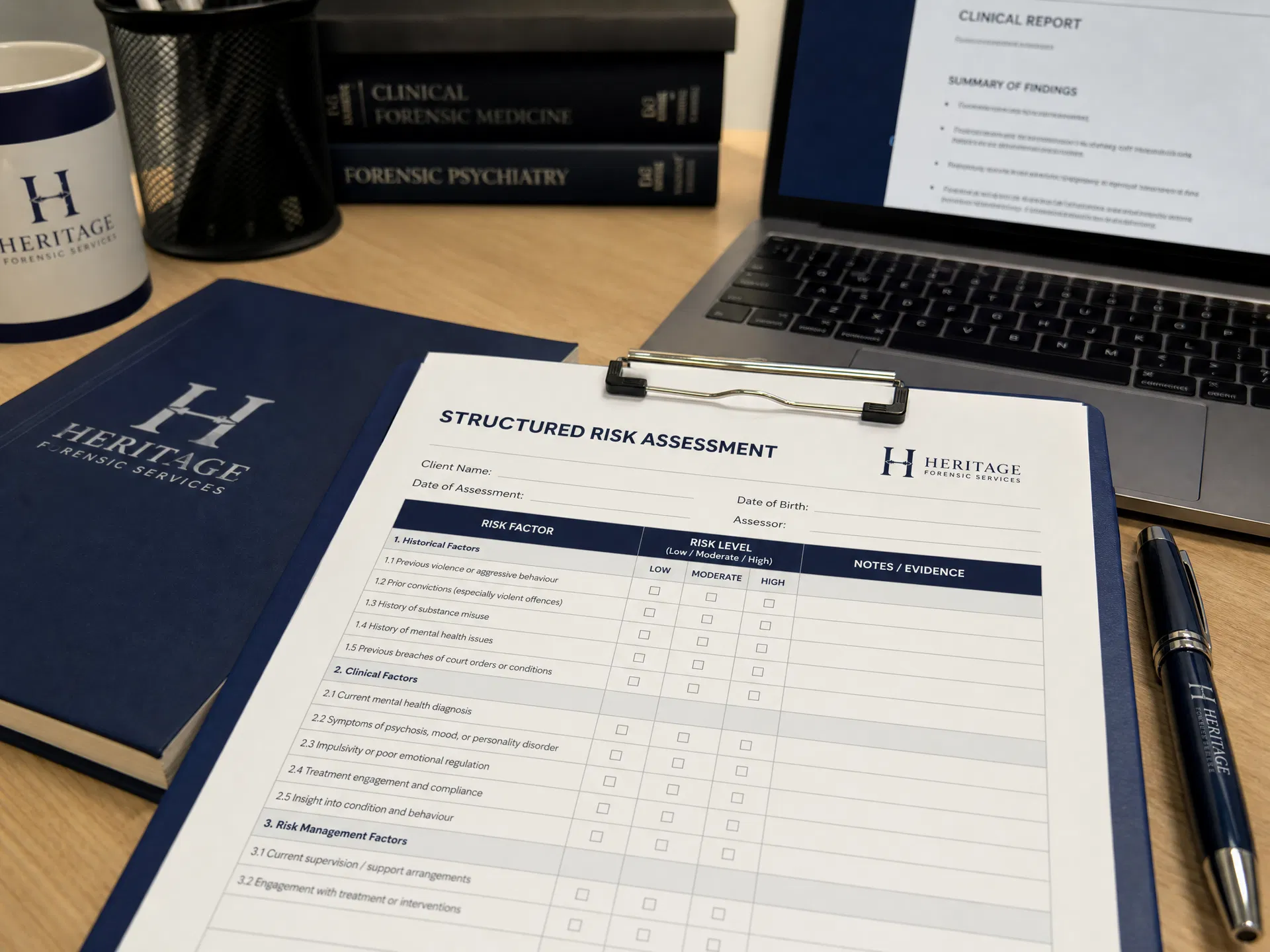
The DASH (Domestic Abuse, Stalking and Honour-Based Violence) risk assessment is the primary structured tool used by police, IDVAs, and frontline practitioners in England and Wales. Understanding its scope — and its limitations — is essential when instructing an expert in family proceedings.
What the DASH is
A 27-question structured professional judgement tool that rates risk as standard, medium, or high. High-risk cases are referred to MARAC. Developed by SafeLives (formerly CAADA) and validated for use by frontline practitioners.
What the DASH is not
The DASH is a triage tool, not a forensic risk assessment. It does not replace a full expert risk assessment in court proceedings. A DASH rated as standard risk does not mean the risk is low — it means the case does not meet the threshold for MARAC referral at that point in time.
SARA for court proceedings
The Spousal Assault Risk Assessment (SARA) is the forensic tool used by expert witnesses to assess perpetrator risk in court proceedings. It provides a structured, evidence-based framework for identifying risk factors and formulating a risk management plan.
DASH Risk Factor Categories
- Has the current incident resulted in injury?
- Is the victim frightened?
- Is there a history of domestic abuse?
- Has the abuse increased in frequency or severity?
- Has the perpetrator ever used weapons or threatened to use them?
Source: SafeLives, DASH Risk Identification Checklist, 2009 (revised 2014). View DASH checklist ↗
Coercive Control: The Evan Stark Framework
Coercive control — criminalised under section 76 of the Serious Crime Act 2015 — is a pattern of behaviour that seeks to take away the victim's liberty or freedom and strip away their sense of self. Evan Stark's model, which underpins the statutory definition in the Domestic Abuse Act 2021, frames coercive control as a liberty crime rather than a series of discrete incidents of violence.
Courts frequently struggle to evaluate coercive control because it does not leave visible injuries and because victims often minimise or rationalise the behaviour. Expert evidence from a psychologist with specialist knowledge of coercive control dynamics can assist the court in understanding why a victim may have remained in the relationship, why they may have retracted allegations, and why their account may appear inconsistent.
Isolation
Cutting the victim off from friends, family, and support networks to increase dependency on the perpetrator.
Monitoring & surveillance
Tracking the victim's movements, communications, and activities — including digital surveillance.
Degradation
Humiliating, belittling, and undermining the victim's sense of self-worth and identity.
Micro-regulation
Controlling everyday behaviour — what the victim wears, eats, spends, and who they see — to establish dominance.
Source: Stark, E. (2007). Coercive Control: How Men Entrap Women in Personal Life. Oxford University Press. doi:10.1093/acprof:oso/9780195384048.001.0001 ↗
Who Conducts Domestic Abuse Assessments?
The discipline of the assessing expert depends on the specific questions the court needs answered. In complex cases, more than one expert may be required.
Consultant Clinical Psychologist
Victim impact assessmentAssesses the psychological consequences of domestic abuse on the victim, including PTSD, complex trauma, anxiety, and depression. Uses validated tools such as the Clinician-Administered PTSD Scale (CAPS-5) and the Impact of Event Scale (IES-R). Addresses the causal link between the alleged abuse and the psychological presentation, and the prognosis for recovery.
Consultant Forensic Psychologist
Perpetrator risk assessmentAssesses the risk of future violence using structured professional judgement tools including the SARA (Spousal Assault Risk Assessment). Evaluates the perpetrator's personality, insight into the impact of their behaviour on the victim and children, and their capacity to change. Particularly relevant in cases where contact is sought and the court must weigh the risk of harm against the benefits of the child maintaining a relationship with the parent.
Specialist Coercive Control Expert
Pattern behaviour analysisA psychologist with specific expertise in coercive control dynamics can assist the court in understanding the pattern of behaviour in the case, applying Evan Stark's framework to the specific facts, and explaining why the victim's behaviour — including remaining in the relationship or retracting allegations — is consistent with the known dynamics of coercive control.
Child & Adolescent Psychologist
Child impact assessmentAssesses the impact of domestic abuse on the child's emotional and behavioural development, their attachment relationships, and their understanding of the abuse. Uses tools including the Strengths and Difficulties Questionnaire (SDQ) and child-specific trauma measures. Informs the court's consideration of the child's welfare and the arrangements most likely to promote their recovery. See also our guide on parenting capacity assessments for further detail.
When a Standard-Risk DASH Concealed a High-Risk Pattern
In a recent private law case involving a contact dispute, the police DASH completed at the time of the most recent incident had rated the case as standard risk. The mother's solicitors were concerned that this rating did not reflect the full history of the relationship, which included a pattern of financial control, isolation from family, and escalating psychological abuse over a period of seven years. No physical violence had been reported to police.
We instructed a consultant forensic psychologist with specialist expertise in coercive control. The expert conducted a full SARA assessment of the father and a psychological impact assessment of the mother using the CAPS-5. The SARA identified multiple static and dynamic risk factors that had not been captured by the DASH — including the father's minimisation of the abuse, his failure to accept responsibility, and his pattern of using the children as a mechanism of control following separation.
The expert's report explained to the court why a standard-risk DASH rating in a case of coercive control without physical violence is not a reliable indicator of low risk, and why the absence of physical violence does not reduce the psychological harm to the victim or the children. The court found the expert's evidence compelling and made a supervised contact order pending the father's completion of a perpetrator programme. This case illustrates why the letter of instruction must specifically ask the expert to address the limitations of the DASH in the context of the specific facts of the case.
How to Instruct a Domestic Abuse Expert Witness
Selecting the right expert is the most important decision in a domestic abuse case. Not all psychologists have specialist expertise in domestic abuse and coercive control. The instructing solicitor should confirm that the expert is trained in the DASH and SARA tools and has experience of giving evidence in family proceedings.
Identify the Assessment Questions
Define whether the court needs a psychological impact assessment of the victim, a risk assessment of the alleged perpetrator, a perpetrator insight assessment, or a child impact assessment. Each question requires a different expert discipline and assessment approach.
Apply for Court Permission Under FPR Part 25
Apply at the first hearing or Case Management Hearing. In domestic abuse cases, early application is essential to avoid timetable disruption. The application must set out the necessity of the assessment, the expert's qualifications, the proposed timetable, and the estimated cost.
Instruct Separate Experts for Victim and Perpetrator
Where both the victim and the alleged perpetrator are to be assessed, separate experts must be instructed to avoid any conflict of interest. The court may direct that the experts meet to discuss their findings before the final hearing.
Agree the Letter of Instruction
Draft a specific letter of instruction agreed between all parties. It must identify the threshold findings, the specific domestic abuse allegations, the risk factors in the case, and the questions the expert is asked to address. Confirm the expert is trained in the DASH risk assessment tool and has experience in family proceedings.
Provide the Full Document Bundle
Provide the expert with a complete paginated bundle including police disclosure, MARAC minutes, local authority records, medical records, previous assessments, and any prior expert reports. The DASH risk assessment completed by police or IDVA should always be included.
FPR Part 25 — court permission required
Court permission is required before instructing any expert in family proceedings under FPR Part 25. In domestic abuse cases, apply at the first hearing. Late applications are routinely refused and can disrupt the timetable.
Frequently Asked Questions
Related Guides
Parenting Capacity Assessment
Psychological assessments in care proceedings and private law
Non-Accidental Injury Expert Evidence
Medical expert evidence in suspected NAI cases
Hair Strand Testing
SoHT 2022 thresholds, EtG/FAEE markers in family proceedings
Litigation Capacity in Family Court
Assessing a party's capacity to conduct proceedings
FPR Part 25 Expert Evidence
The necessity test, permission applications, and the expert's duties
Family Law Expert Witnesses
Our full range of family law expert witness services
Instruct a Domestic Abuse Expert
We match you with forensic psychologists experienced in DASH, SARA, and coercive control assessments under FPR Part 25.
Instruct an Expert+44 (0) 330 024 2770Quick Facts
References & Primary Sources
Key legislation, case law, professional guidance, and research underpinning domestic abuse and coercive control assessments in England and Wales.
- Domestic Abuse Act 2021 ↗Statutory definition of domestic abuse, including coercive and controlling behaviour.
- Serious Crime Act 2015, s.76 ↗Criminal offence of controlling or coercive behaviour in an intimate or family relationship.
- Family Procedure Rules 2010, PD12J ↗Practice Direction governing domestic abuse allegations in private law family proceedings.
- Children Act 1989, s.1(3) ↗The welfare checklist, including harm the child has suffered or is at risk of suffering.
- Re H-N and Others [2021] EWCA Civ 448 ↗Court of Appeal guidance on fact-finding hearings in domestic abuse cases and the primacy of pattern evidence.
- Re L-W (Children) [2019] EWCA Civ 159 ↗Court of Appeal on the approach to domestic abuse allegations in private law proceedings.
- Re K and H (Children) [2015] EWCA Civ 543 ↗Court of Appeal on the conduct of fact-finding hearings and the use of Scott Schedules.
- Re B-S (Children) [2013] EWCA Civ 1146 ↗Holistic welfare analysis — relevant where domestic abuse affects placement decisions.
- Stark, E. — Coercive Control (2007) ↗The foundational academic work underpinning the statutory definition of coercive control.
- SafeLives — DASH Risk Identification Checklist ↗The 27-factor structured professional judgement tool for domestic abuse risk assessment.
- Home Office — Statutory Guidance: Controlling or Coercive Behaviour (2023) ↗Updated statutory guidance on the criminal offence of coercive control.
- CAFCASS — Domestic Abuse Practice Framework ↗CAFCASS guidance on assessing domestic abuse in family proceedings.
Content reflects the law as at 2026. Always verify currency at legislation.gov.uk and judiciary.gov.uk.
Related Guides
Parenting Capacity Assessment
DoH Framework domains, capacity to change evidence, and FPR Part 25 compliance.
Non-Accidental Injury Expert Evidence
Multi-disciplinary approach, Re L case law, and challenging medical opinion in care proceedings.
Risk Assessment Expert Evidence
OASys, HCR-20, and PCL-R — structured professional judgement tools used in family proceedings.
Role of Expert Witness in Family Court
How the court uses expert evidence in care, contact, and adoption proceedings.
FPR Part 25 Explained
The procedural rules governing expert evidence in family proceedings.
Family Law Expert Witnesses
Our full panel of psychology, psychiatry, and forensic experts for family proceedings.