
What Is Forensic Toxicology?
Forensic toxicology is the application of toxicological science to legal proceedings. A forensic toxicologist analyses biological specimens — blood, urine, hair, vitreous humour, or post-mortem tissue — to detect, identify, and quantify drugs, alcohol, and other toxic substances. The discipline sits at the intersection of analytical chemistry, pharmacology, and forensic science, and its outputs are used in criminal trials, coroner inquests, family court proceedings, and employment tribunals across England and Wales.
The expert's role extends beyond the laboratory. A forensic toxicologist must translate analytical findings into plain language that a judge, jury, or coroner can apply to the facts of the case. That requires not only scientific expertise but also a thorough understanding of the procedural rules governing expert evidence — principally CrimPR Rule 19 in criminal proceedings and FPR Part 25 in family proceedings.
Forensic toxicology is distinct from clinical toxicology (which focuses on treating poisoned patients) and from the broader discipline of drug and alcohol expert witness work, which encompasses clinical assessment of dependency and addiction. Understanding the distinction is important when selecting the right expert for a given case.
When Is a Forensic Toxicology Expert Required?
The need for forensic toxicology evidence arises across a range of proceedings. The following scenarios represent the most common instructions received by Expert Witness UK, each requiring a different analytical focus and a different set of interpretive skills.
Section 5A Road Traffic Act 1988 creates specified limits for 17 controlled drugs in blood. A forensic toxicologist interprets blood drug concentrations against the statutory thresholds, assesses whether the Section 5A(3) medical defence is available, and provides opinion on impairment and polydrug interactions.
Drug-Driving Expert EvidenceWhere a complainant alleges incapacitation by a substance, a toxicologist analyses samples for drugs including GHB, benzodiazepines, ketamine, and novel psychoactive substances, and provides opinion on the likely effects at the relevant time, accounting for the narrow detection windows of many DFSA drugs.
In cases where poisoning is alleged — by medication, industrial chemicals, or illicit drugs — a forensic toxicologist establishes cause of death and whether the concentration found is consistent with therapeutic use, accidental exposure, or deliberate administration. Post-mortem redistribution must be carefully addressed.
Coroners routinely instruct forensic toxicologists in inquests involving suspected drug-related deaths, alcohol-related accidents, and medication overdoses. The expert provides opinion on whether the substance found was causative of death, contributory, or incidental, and whether the concentration is consistent with the circumstances.
In care proceedings under the Children Act 1989, forensic toxicology evidence — particularly hair strand testing — establishes whether a parent has a pattern of chronic alcohol or drug use affecting parenting capacity. Instructions require FPR Part 25 permission and compliance with Practice Direction 25B.
Hair Strand Testing in Family CourtWhere substance intoxication is relevant to fitness to plead, diminished responsibility, or sentencing mitigation, a toxicologist provides evidence on the pharmacological effects of the substance at the relevant concentration. This evidence often works alongside a psychiatric assessment of mental state.
Analytical Methods in Forensic Toxicology
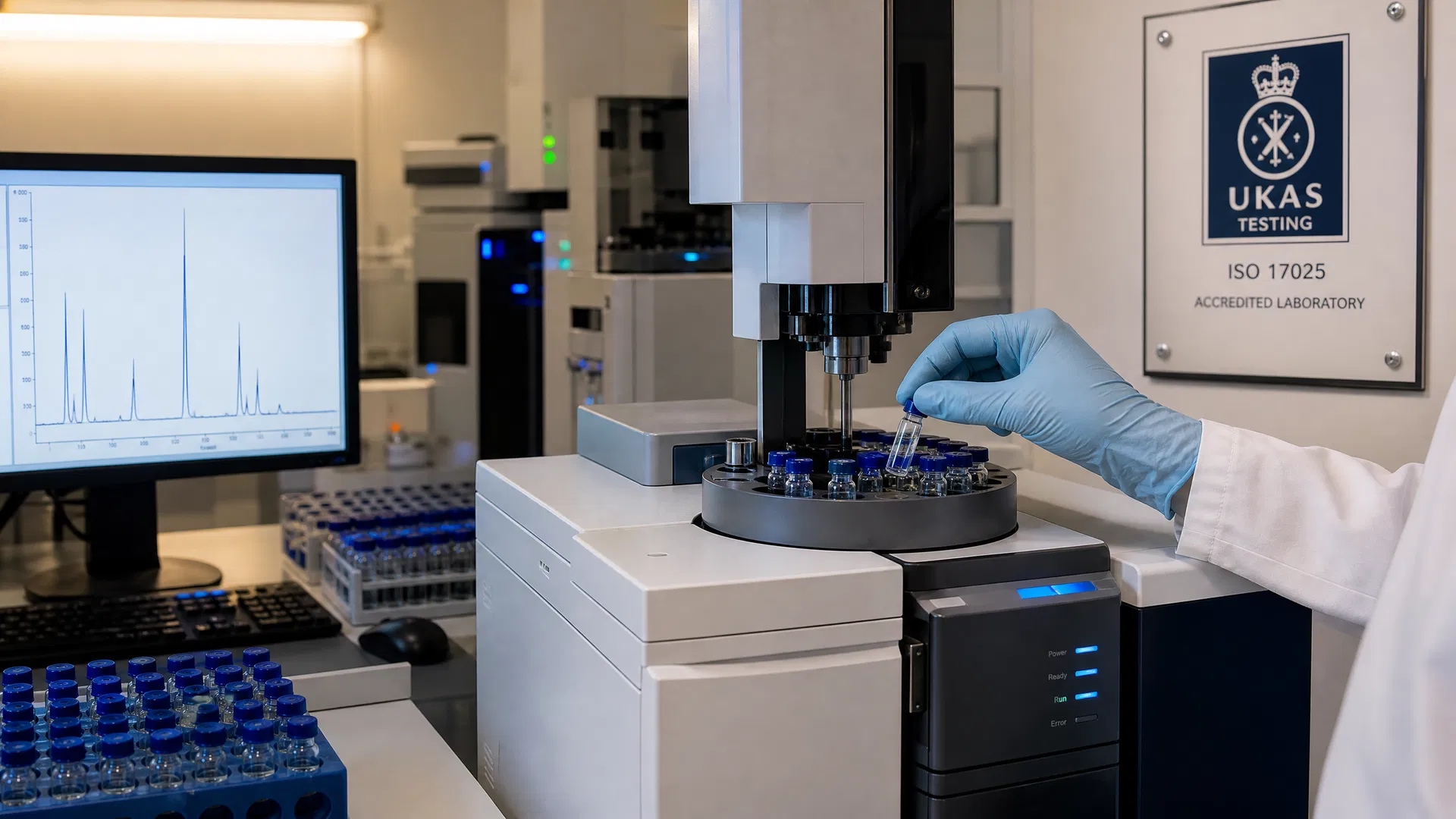
The analytical methods used by forensic toxicologists are governed by strict accreditation standards. Laboratories operating in the UK criminal justice system are required to hold UKAS accreditation to ISO/IEC 17025:2017. The Forensic Science Regulator's guidance document FSR-GUI-0029 sets out the principles that must be followed for toxicology analysis for drugs. Screening results without confirmatory analysis are insufficient for court purposes.
| Technique | Application | Court status |
|---|---|---|
| Immunoassay (IA) | Screening for drug classes in urine or blood | Screening only — confirmation required before court use |
| Gas Chromatography–Mass Spectrometry (GC-MS) | Confirmation and quantification of volatile compounds and many drugs | Gold standard for alcohol and many drugs; accepted by courts |
| Liquid Chromatography–Tandem MS (LC-MS/MS) | Confirmation of non-volatile drugs, metabolites, and novel psychoactive substances | Preferred for NPS and prescription drugs; court-accepted |
| Headspace Gas Chromatography (HS-GC) | Blood and urine alcohol quantification | Standard method for drink-driving and alcohol-related cases |
| Hair Strand Analysis | Chronic drug and alcohol use over weeks to months | Accepted in family and criminal proceedings; SoHT guidelines apply |
| Vitreous Humour Analysis | Post-mortem drug and alcohol quantification | Preferred in PMR-affected cases; less subject to redistribution |
Source: UKIAFT Forensic Toxicology Laboratory Guidelines (2010), doi:10.1016/j.scijus.2010.09.004; FSR Guidance FSR-GUI-0029 (2026).
Post-Mortem Redistribution: The Critical Interpretive Challenge
Post-mortem redistribution (PMR) is one of the most significant interpretive challenges in forensic toxicology. After death, drugs migrate from tissues, organs, and the gastrointestinal tract into the bloodstream, causing blood drug concentrations to change substantially from their ante-mortem levels. PMR can cause concentrations to increase by a factor of two to ten for drugs with high volumes of distribution, such as tricyclic antidepressants, methadone, amitriptyline, and cocaine.
- Femoral blood is preferred over central (cardiac) blood for post-mortem analysis — it is less subject to PMR.
- Vitreous humour is the most PMR-resistant specimen and is particularly valuable for alcohol and some drugs.
- The site and timing of blood collection must be documented and disclosed in the expert's report.
- Drugs with a high volume of distribution (Vd > 3 L/kg) are most susceptible to significant PMR.
- A forensic toxicologist must address PMR explicitly when interpreting any post-mortem blood drug concentration.
The academic literature on PMR is well-established. Yarema & Becker (2005) identified that PMR can cause central blood concentrations of methadone to exceed femoral concentrations by a factor of three or more. More recent work by Hamnett & Dror (2020) has highlighted the additional risk of contextual bias in toxicological interpretation — the tendency for analysts to be influenced by case information when interpreting ambiguous results. doi:10.1016/j.fsisyn.2020.07.001. Defence solicitors should always ask whether the prosecution toxicologist has addressed PMR and whether femoral blood was used.
Drug-Driving: The Section 5A Framework
Section 5A of the Road Traffic Act 1988, inserted by the Crime and Courts Act 2013, creates a strict liability offence of driving with a specified controlled drug above a prescribed blood limit. The Drug Driving (Specified Limits) (England and Wales) Regulations 2014 set limits for 17 drugs across two categories: zero-tolerance drugs (set at levels designed to catch deliberate use) and medicinal drugs (set at higher levels to accommodate therapeutic use).
A forensic toxicologist provides opinion on whether the blood concentration found exceeds the statutory limit, whether the Section 5A(3) medical defence is available on the facts, and — in cases involving multiple substances — the combined pharmacological effect. For a detailed analysis of the statutory defence and challenge grounds, see the Drug-Driving Defence Expert Evidence guide.
| Drug | Category | Limit (μg/L blood) |
|---|---|---|
| Delta-9-THC (cannabis) | Zero-tolerance | 2 |
| Cocaine | Zero-tolerance | 10 |
| 6-Monoacetylmorphine (heroin metabolite) | Zero-tolerance | 5 |
| Clonazepam | Medicinal | 50 |
| Diazepam | Medicinal | 550 |
| Morphine | Medicinal | 80 |
| Methadone | Medicinal | 500 |
Source: Drug Driving (Specified Limits) (England and Wales) Regulations 2014 (SI 2014/2868). Partial list — 17 drugs are specified in total.
Hair Strand Testing in Forensic Toxicology
Hair strand analysis provides a retrospective window into chronic drug and alcohol use that blood and urine testing cannot. One centimetre of hair approximates one month of growth; a 3 cm sample provides a three-month retrospective picture. Hair strand testing is most commonly instructed in family proceedings to establish a pattern of chronic alcohol or drug use affecting parenting capacity, but it is also used in criminal proceedings and workplace investigations.
The Society of Hair Testing (SoHT) publishes international consensus guidelines on the interpretation of hair strand results. The 2023 consensus (doi:10.1002/dta.3526) sets out recommended cut-off concentrations for drugs and alcohol markers (EtG and FAEE), sample collection and storage procedures, and the limitations of the methodology — including the effects of hair treatment, cosmetic procedures, and environmental contamination on results.
A forensic toxicologist instructed in family proceedings must apply the SoHT guidelines and explain their limitations to the court. Under FPR Part 25, the court must give permission before a forensic toxicology expert is instructed. For a detailed guide to hair strand testing in the family court context, see Hair Strand Testing in Family Court.
Challenging Forensic Toxicology Evidence
Under R v Dlugosz [2013] EWCA Crim 2, the court must be satisfied that expert evidence has a sufficiently reliable scientific basis before it is admitted. Forensic toxicology evidence is not immune to challenge. Defence solicitors should consider the following grounds when reviewing prosecution toxicology reports.
The continuity of the sample from collection to analysis must be documented. Any gap in the chain of custody raises questions about sample integrity and the possibility of contamination or substitution. Request the full chain of custody documentation as part of disclosure.
Blood samples for drug-driving must be collected in the correct preservative tubes (fluoride-oxalate for alcohol; plain or EDTA for drugs) and stored at the correct temperature. Improper storage can cause post-collection changes in drug concentration, particularly alcohol (fermentation) and some benzodiazepines (degradation).
The laboratory must have used validated methods accredited to ISO/IEC 17025. Screening results without confirmatory GC-MS or LC-MS/MS analysis are insufficient for court purposes. Request the laboratory's UKAS accreditation schedule and the validation data for the specific method used.
In post-mortem cases, the expert must address whether PMR has been accounted for, whether femoral blood was used, and whether the collection site and timing are documented. Failure to address PMR is a significant interpretive gap that a defence toxicologist can exploit.
The expert's interpretation of what a given blood concentration means in terms of impairment or behaviour is an opinion, not a fact. It can be challenged by instructing a defence toxicologist to review the primary data — chromatograms, calibration curves, and quality control data — and provide a counter-opinion.
A forensic toxicologist must be appropriately qualified and must have experience of giving evidence in the relevant type of proceedings. Their independence from the instructing party must be beyond question. Under CrimPR Rule 19, the expert's overriding duty is to the court.
Qualifications of a Forensic Toxicology Expert Witness
A forensic toxicologist instructed as an expert witness should hold a relevant degree in chemistry, biochemistry, or pharmacology, and postgraduate qualifications in forensic science or toxicology. Professional membership of the Chartered Society of Forensic Sciences (CSFS) or the British Toxicology Society (BTS) is standard. Fellowship of the CSFS (FCSFS) indicates a higher level of professional recognition and is a marker of significant medico-legal experience.
All forensic toxicologists on the Expert Witness UK panel have been vetted for CrimPR Rule 19 compliance, hold appropriate professional indemnity insurance, and have a track record of giving evidence in the relevant type of proceedings. We match instructions to experts with specific experience in drug-driving, post-mortem toxicology, family proceedings, or homicide cases as required. For guidance on what to look for in an expert's CV and report, see our Expert Witness Report Writing Guide.
Legal Aid and Private Funding for Forensic Toxicology Experts
Expert Witness UK accepts both Legal Aid instructions, at the applicable Legal Aid rates, and privately funded instructions. For guidance on the relevant Legal Aid route and prior-authority process, see the Prior Authority & LAA Funding Guide.
Accepted at the applicable Legal Aid rates, with the relevant route confirmed for the individual case.
Accepted with fees agreed in advance for the defined scope of work.
Where advance approval is appropriate, address it before work begins through the relevant Legal Aid route.
We provide itemised estimates, CVs and case-specific scope information for the funding route.
How to Instruct a Forensic Toxicology Expert Witness
Define the specific question the expert is being asked to address: drug-driving blood concentration, post-mortem cause of death, hair strand chronic use pattern, drug-facilitated assault, or workplace testing. The more precisely the issue is defined, the more targeted and cost-effective the instruction will be.
For criminal cases, use the LAA digital prior-authority service where advance approval is needed. For family cases, use CCMS. Include the expert category, registered office location, rate, hours, estimate and case-specific justification.
The letter of instruction must set out the facts of the case, the specific questions the expert is asked to address, the relevant legal framework (CrimPR Rule 19 for criminal; FPR Part 25 for family), and the court timetable. The expert must be informed that their overriding duty is to the court.
Provide the expert with the prosecution toxicology report, the laboratory's primary analytical data (chromatograms, calibration data, chain of custody documentation), and any relevant medical records. A defence toxicologist cannot properly review prosecution evidence without access to the underlying data.
Before serving the report, verify it contains all mandatory elements under CrimPR Rule 19.4: qualifications, instructions summary, facts and assumptions, opinion, range of opinion where applicable, conclusions, and the written declaration that the expert understands their duty to the court.
Forensic Toxicology vs Drug & Alcohol Expert Witness: Key Differences
| Dimension | Forensic Toxicologist | Drug & Alcohol Expert |
|---|---|---|
| Primary role | Analyses specimens; quantifies substances | Assesses dependency, tolerance, and clinical effects |
| Qualifications | Chemistry/pharmacology + forensic science | Medicine, psychiatry, or clinical pharmacology |
| Evidence type | Analytical data — concentrations and metabolites | Clinical opinion — diagnosis, prognosis, risk |
| Typical proceedings | Criminal, coronial, family (hair strand) | Criminal, family, employment, regulatory |
| Laboratory required | Yes — ISO/IEC 17025 accredited | No — clinical assessment and records review |
| Key guidance | FSR-GUI-0029, SoHT guidelines, UKIAFT guidelines | NICE guidelines, BPS/RCPsych guidance |
Many complex cases require both types of expert. For example, a drug-driving case involving a defendant with a documented methadone prescription may require a forensic toxicologist to interpret the blood concentration data and a drug and alcohol expert to provide clinical opinion on the defendant's tolerance, the therapeutic dose, and the likely effect on driving ability. Expert Witness UK can coordinate joint instructions where both disciplines are required.