Letter of Instruction to an Expert Witness
A letter of instruction to an expert witness is the formal document by which a solicitor or barrister instructs an expert to prepare a report for use in legal proceedings. It must comply with CrimPR Rule 19, FPR Part 25, or the relevant immigration practice direction, and must set out the specific questions the expert is asked to address.
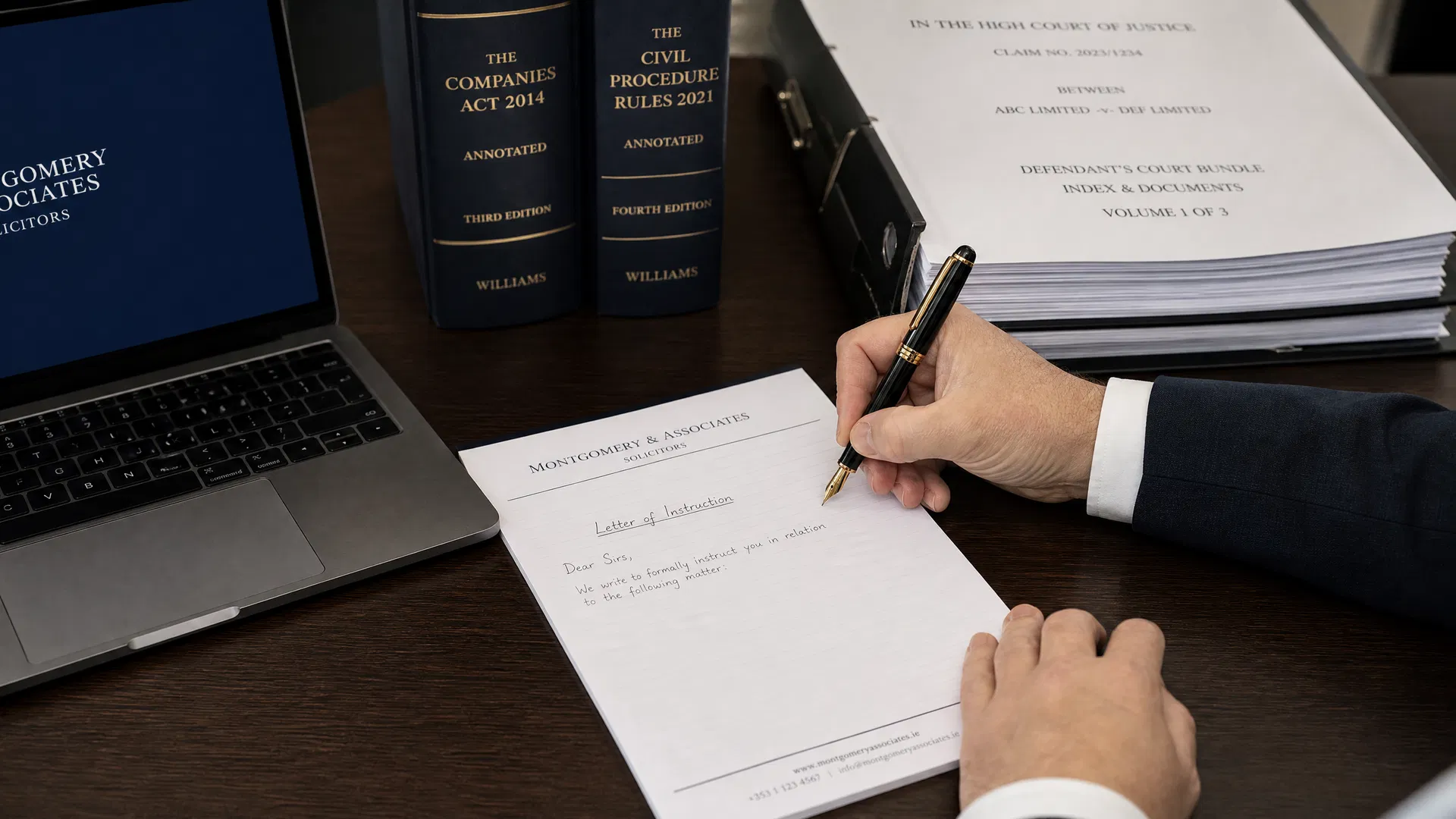
What Is a Letter of Instruction to an Expert Witness?
A letter of instruction to an expert witness is the formal document by which a solicitor or barrister instructs an expert to prepare a report for use in legal proceedings. It is the primary means by which the instructing party communicates the factual background to the case, the specific questions the expert is asked to address, the procedural rules that apply, and the documents the expert should consider.
The letter of instruction is not simply an administrative formality. It is the document that determines the scope and usefulness of the expert's report. A well-drafted letter of instruction produces a focused, admissible report that addresses the specific issues in the case. A poorly drafted letter produces a generic report that is unlikely to assist the court and may not be admitted.
The requirements for a letter of instruction differ depending on the proceedings. In criminal proceedings, the letter is governed by CrimPR Rule 19 and the Criminal Practice Directions. In family proceedings, it is governed by FPR Part 25 and PD25B, which require the letter to be agreed by all parties and approved by the court before it is sent to the expert. In immigration proceedings, the letter is governed by the Upper Tribunal's practice direction and the Home Office's guidance on expert evidence.
The 10 Elements of a Compliant Letter of Instruction
The following elements should be included in every letter of instruction to an expert witness, regardless of the proceedings. Additional requirements apply in family proceedings under PD25B.
Heading and Case Reference
Required in all proceedingsThe letter should be headed with the case name, court reference, and the expert's name and address. In family proceedings, include the children's names and dates of birth. In criminal proceedings, include the defendant's name, date of birth, and the charge(s).
Instructing Solicitor and Parties
Required in all proceedingsIdentify the instructing solicitor, the party on whose behalf the expert is instructed (or that it is a joint instruction), and the names and roles of all other parties. In family proceedings, identify the local authority, parents, and children's guardian.
The Expert's Duties
Required in all proceedingsState the procedural rules that apply and confirm that the expert is aware of their duties to the court. In criminal proceedings, refer to CrimPR Rule 19.2. In family proceedings, refer to FPR Part 25 and PD25B. In immigration proceedings, refer to the relevant practice direction.
Factual Background
Required in all proceedingsProvide a clear, neutral summary of the factual background to the case. Do not advocate for your client's position. The expert must be able to identify the facts on which their opinion is based. In family proceedings, include the threshold findings alleged by the local authority.
The Expert's Qualifications and Experience
Required in family proceedings (PD25B)Confirm the expert's qualifications, professional registration, and relevant experience. In family proceedings, PD25B requires the letter to confirm that the expert has the relevant expertise and that there is no conflict of interest.
The Specific Questions
Required in all proceedings — must be specificSet out the specific questions the expert is asked to address. Questions must be specific to the issues in the case. Generic questions — such as 'please provide a psychological assessment of X' — produce generic reports that are unlikely to assist the court. In family proceedings, questions must be consistent with the court's permission order.
The Document Bundle
Required in all proceedingsList all documents provided to the expert in a numbered schedule. Confirm that the bundle is complete and that no relevant documents have been withheld. In family proceedings, the bundle should include the threshold document, care plan, social work chronology, and all previous assessments.
Format and Length of Report
Recommended in all proceedingsSpecify the required format and, if relevant, the maximum length of the report. In family proceedings, the court may have given directions on format. In criminal proceedings, the report should comply with CrimPR Rule 19.3 and the requirements of the Criminal Practice Directions.
Timetable and Deadline
Required in all proceedingsState the deadline for the report, having regard to the court's timetable. In family proceedings, the deadline will usually be set by the court's directions order. In criminal proceedings, the deadline should allow sufficient time for the prosecution to respond before the relevant hearing.
Fee and LAA Authority
Required in all proceedingsConfirm the agreed fee and the basis on which it is calculated. If the case is publicly funded, confirm whether prior authority has been obtained and the rate at which the expert will be paid. Attach a copy of the prior authority where obtained.
CrimPR vs FPR vs Immigration — Key Differences
The requirements for a letter of instruction differ significantly depending on the proceedings. The table below summarises the key differences.
| Aspect | Criminal (CrimPR) | Family (FPR) | Immigration |
|---|---|---|---|
| Governing rules | CrimPR Rule 19; Criminal Practice Directions | FPR Part 25; PD25B; PD25C | Upper Tribunal Practice Direction; Home Office guidance |
| Court permission required? | No — prosecution must be notified | Yes — before instruction | No — expert must be independent |
| Letter agreed by parties? | No — defence drafts; prosecution may comment | Yes — all parties must agree; court must approve | No — instructing party drafts |
| Single joint expert? | Rare — parties instruct separately | Default where court directs | Rare — claimant instructs own expert |
| Key duties reference | CrimPR Rule 19.2 — overriding duty to court | FPR 25.3; PD25B para 9 | Ikarian Reefer principles |
| Report disclosure | CrimPR Rule 19.3 — all material instructions | FPR 25.14; PD25B para 13 | Full disclosure to all parties |
Six Common Drafting Errors — and How to Avoid Them
The following errors appear regularly in letters of instruction. Each has a predictable consequence that can be avoided with careful drafting.
When Generic Questions Produce Inadmissible Reports
A recurring pattern in instructions we receive is the letter that asks the expert to "provide a psychological assessment of the defendant and comment on any relevant mental health issues." This question is too broad to produce a useful report. The expert does not know whether the instructing solicitor needs evidence on fitness to plead, diminished responsibility, sentencing mitigation, or something else entirely.
In one instruction we managed, the expert produced a comprehensive psychological assessment that addressed fitness to plead, mental health history, and risk — none of which were the issues in the case. The instructing solicitor needed evidence on the defendant's cognitive functioning to support a ground of appeal based on failure to understand the proceedings. The letter had not asked that question.
The report had to be supplemented at additional cost and delay. When we assist with letters of instruction, we ask the instructing solicitor to identify the specific legal issue the expert evidence is intended to address before we draft the questions. This single step eliminates the most common cause of inadequate expert reports.
How to Draft a Letter of Instruction — Step by Step
Identify the Expert's Discipline and the Questions
Before drafting the letter, identify the specific discipline required (psychology, psychiatry, forensic science, etc.) and the specific questions the expert is asked to address. Generic questions produce generic reports.
Set Out the Factual Background
Provide a clear, neutral summary of the factual background to the case. Do not advocate for your client's position. The expert must be able to identify the facts on which their opinion is based.
Identify the Procedural Rules That Apply
State the procedural rules that apply — CrimPR Rule 19, FPR Part 25, or the relevant immigration practice direction. Confirm that the expert is aware of their duties to the court.
Agree the Letter with Other Parties
In family proceedings, the letter must be agreed by all parties and approved by the court before it is sent. In criminal proceedings, the prosecution should be notified of the instruction.
Provide the Document Bundle
Provide the expert with a paginated document bundle containing all documents relevant to the questions they are asked to address. Confirm that the bundle is complete and that no relevant documents have been withheld.
Related Subtopics
CrimPR Rule 19 Compliance
The expert's duties in criminal proceedings and how to instruct compliantly.
FPR Part 25 Expert Evidence
The necessity test, permission applications, and the expert's duties in family proceedings.
Ikarian Reefer Principles
The foundational principles governing expert witness duties in UK proceedings.
Joint Expert Statements
Experts' meetings and joint statements under CrimPR 19.6 and FPR Part 25.
Expert Witness Report Writing
How to structure an expert witness report that complies with procedural rules.
How to Choose an Expert Witness
The criteria for selecting the right expert for the specific issues in the case.
Prior Authority & LAA Rates
How to obtain prior authority for expert fees in publicly funded cases.
Instruct an Expert
Contact Expert Witness UK to instruct an expert witness today.
Frequently Asked Questions
Related Guides
CrimPR Rule 19 Compliance Guide
The expert's duties in criminal proceedings and how to instruct compliantly.
FPR Part 25 Expert Evidence
The necessity test, permission applications, and the expert's duties in family proceedings.
Joint Expert Statements
Experts' meetings and joint statements under CrimPR 19.6 and FPR Part 25.
Expert Witness Report Writing
How to structure an expert witness report that complies with procedural rules.
References
Legislation & Rules
Case Law
Ready to Instruct an Expert Witness?
Contact Expert Witness UK to discuss your instruction. We assist with letters of instruction, expert selection, and the full managed instruction process.
Related Guides
Expert Witness Report Writing
Structure, CrimPR Part 19 compliance, and the declaration of truth.
CrimPR Rule 19 Explained
The procedural rules governing expert evidence in criminal proceedings.
FPR Part 25 Explained
The procedural rules governing expert evidence in family proceedings.
Joint Expert Statements & Experts' Meetings
The procedure for experts' meetings, joint statements, and areas of agreement.
Legal Aid & Private Funding
Legal Aid and privately funded instructions, prior-authority guidance, and fee-estimate information.
Instruct an Expert Witness
Submit your instruction online — we respond to every enquiry promptly.